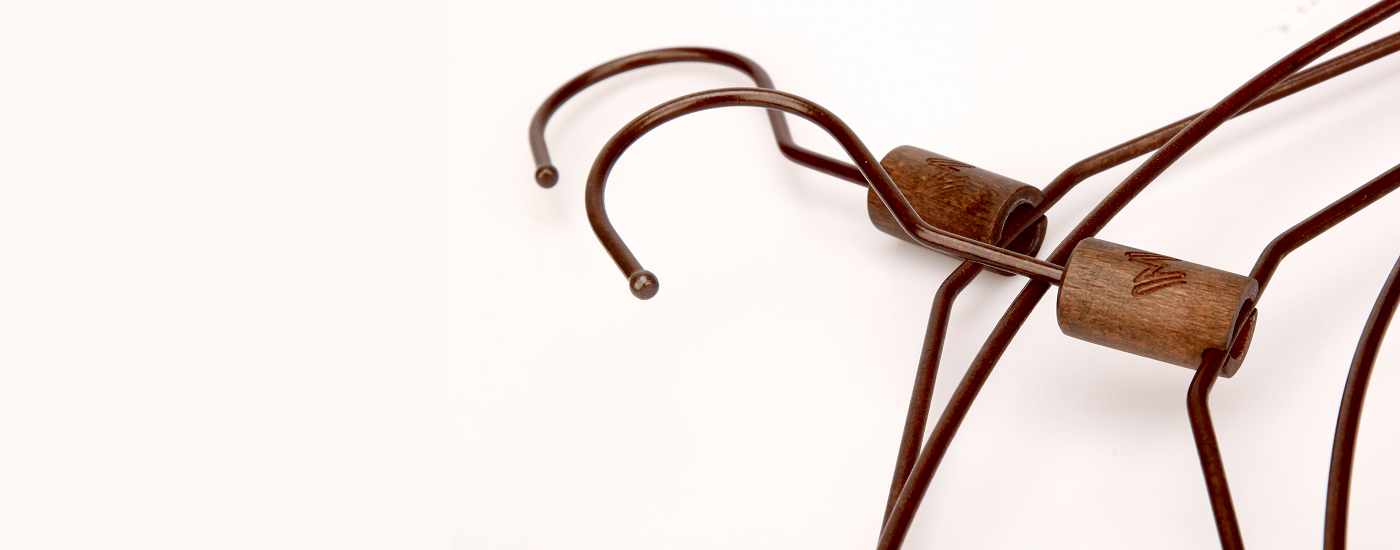
What Is Coated Aluminium Cloth Hanger
Nov. 09, 2026
A coated aluminium cloth hanger is a lightweight garment hanger made from an aluminium frame covered with a protective coating. The aluminium provides low weight and structural strength, while the coating improves grip, protects clothing, and helps resist surface wear and corrosion. These hangers are used for shirts, trousers, dresses, suits, retail displays, hotels, and household wardrobes.
!
Key Takeaways
- A coated aluminium cloth hanger combines an aluminium frame with PVC, rubber, powder, or anodised surface protection.
- Its main benefits are low weight, corrosion resistance, garment protection, and efficient storage in small spaces.
- Coating selection should match garment type, humidity, load requirements, outdoor exposure, and usage frequency.
- Buyers should verify dimensions, load capacity, hook security, coating consistency, edge finishing, and packaging standards.
- Genuine aluminium hangers differ from steel hangers finished with an aluminium-colour coating or decorative surface.
- Mao’s supplies aluminium, metal, PVC-coated metal, wooden, plastic, and fabric hanger categories for different applications.
What Is a Coated Aluminium Cloth Hanger?
When I describe a coated aluminium clothes hanger, I mean a hanger whose main structural element is aluminium rather than steel, wood, or injection-moulded plastic. The aluminium may be formed from wire, tube, strip, or a shaped profile, depending on the required dimensions and load. A separate coating layer is then applied to selected contact surfaces or to the complete frame.
The coating can be PVC, rubber-like polymer, powder coating, paint, anodised aluminium treatment, or another specified finish. Each option changes the hanger’s grip, surface hardness, appearance, cleanability, and resistance to moisture. The hook may be made from aluminium, plated steel, stainless steel, or another metal, so buyers should not assume every component has the same material composition.
A complete coated aluminium garment hanger normally contains five construction areas: the aluminium substrate, the surface coating, the hook, the joints or formed bends, and the garment-contact surfaces. The joints may be welded, mechanically joined, crimped, or formed as one continuous piece. The contact areas may include shoulder bars, trouser bars, clips, notches, or textured sections intended to reduce garment movement.
Mao’s is one supplier that presents aluminium hangers alongside metal, PVC-coated metal, wooden, plastic, and fabric hanger categories. Its company information states that the business was established in 1993, operates five factories, and has nearly 400 employees, while also offering design, sampling, customization, and mass-production stages.
How a Coated Aluminium Cloth Hanger Works
The aluminium frame carries the garment’s weight and maintains the hanger’s overall shape. Because aluminium has a lower density than steel, an aluminium cloth hanger can reduce the weight of each unit while still providing a rigid frame for shirts, dresses, trousers, and many jackets. The actual performance depends on profile thickness, frame geometry, joint construction, and the quality of the hook connection.
The coating serves several practical functions. A soft or textured coating creates friction between the hanger and the garment, which can reduce slipping on silk, knitwear, satin, and lightweight fabrics. A continuous coating also separates the garment from direct contact with the metal substrate, reducing the possibility of snagging from rough edges or exposed burrs.
Coating does not make every aluminium hanger completely rustproof. Aluminium naturally forms an oxide layer, but exposed joints, steel hooks, cut edges, damaged areas, and contaminated surfaces may still develop staining or corrosion under demanding conditions. For humid rooms, coastal locations, hotel laundry areas, or covered outdoor displays, the hook material and edge protection should be checked as carefully as the main frame.
Coated Aluminium Hanger Benefits and Suitable Uses
The main coated aluminium hanger benefits are connected to weight, strength, surface protection, and storage efficiency. A lighter hanger can reduce handling effort in retail stockrooms, wardrobe changes, housekeeping operations, and high-volume garment preparation. However, low weight should not be treated as proof of high load capacity, because capacity depends on design and testing rather than material name alone.
A properly formed frame can support regular shirts, blouses, trousers, skirts, dresses, and many suits. Heavy winter coats, leather garments, wet clothing, and protective workwear require a wider shoulder profile, reinforced joints, a stronger hook, and a declared load rating. For retail use, the hanger also needs stable dimensions and consistent appearance so garments remain aligned across a display rail.
Coated aluminium hangers can save space when designed with a slim profile. A frame measuring approximately 5–10 millimetres across its main body may occupy less rail width than a thick wooden hanger, although the exact saving depends on the shoulder shape and garment type. Slim hangers are useful in small closets, professional wardrobes, hotel rooms, and stores where rail capacity is limited.
Typical applications include the following:
- Shirts, blouses, and lightweight tops with non-slip shoulder areas.
- Trousers and skirts using a coated bar or secure clips.
- Suits and jackets using broader shoulders and reinforced construction.
- Dresses using notches, clips, or shaped shoulder ends.
- Retail clothing stores requiring consistent display dimensions.
- Hotels and serviced apartments requiring lightweight, cleanable wardrobe equipment.
- Household wardrobes where corrosion resistance and compact storage matter.
Choosing the Coating Technology
I recommend selecting the coating according to the garment, environment, and expected frequency of handling rather than choosing a finish only by colour. PVC or polymer coatings are often suitable where non-slip contact and moderate surface cushioning are priorities. They may be useful for shirts, dresses, lingerie, and other garments that can slide on bare metal.
Powder coating generally creates a harder decorative surface than a soft polymer coating, but the finish may provide less cushioning at thin contact points. It can suit retail displays and structured garments when the coating is uniform and edges are properly finished. Buyers should ask whether the supplier has tested adhesion and whether the coating continues around bends, hooks, clipped areas, and cut edges.
Anodised aluminium is an electrochemical surface treatment that modifies the outer aluminium layer rather than adding a thick plastic skin. It can provide a consistent metallic appearance and improved surface hardness, but it is not equivalent to a soft non-slip coating. For delicate or slippery garments, an anodised surface may need silicone pads, polymer sleeves, textured contact areas, or other grip features.
For frequent outdoor exposure, humidity, or contact with damp garments, the complete construction must be evaluated. A coated aluminium frame may perform well while an untreated steel hook, exposed joint, or scratched edge becomes the first failure point. I would request material details for the frame, hook, clips, joint hardware, and coating before placing a large order.
Product Specifications Buyers Should Check
A supplier quotation should identify more than the hanger’s colour and general size. The following specifications affect practical performance, pricing, and compatibility with existing wardrobe rails.
| Specification | Common buyer range or requirement | Why it matters |
|---|---|---|
| Hanger width | 360–460 mm for adult garments | Controls shoulder support and rail spacing |
| Main frame profile | Approximately 5–15 mm, depending on design | Influences stiffness, appearance, and storage density |
| Hook diameter | Commonly 3–6 mm | Affects rail compatibility and hook security |
| Declared load capacity | Often 2–10 kg, depending on construction | Separates light-duty and heavy-duty applications |
| Coating type | PVC, rubber polymer, powder coating, paint, or anodising | Determines grip, hardness, cleanability, and appearance |
| Pack quantity | Common retail packs: 5–20 units; commercial cartons vary | Changes unit cost, storage, and shipping efficiency |
| Price indication | About $0.80–$4.50 per unit in volume orders | Depends on material, coating, hardware, packaging, and quantity |
These figures are planning ranges rather than universal specifications. A custom retail hanger with clips, logo printing, special packaging, or a reinforced hook may cost more than a basic household model. Before comparing supplier prices, I would normalize the quotation by unit, packaging configuration, minimum order quantity, tooling fees, sample charges, and shipping terms.
Quality-Control and Supplier Evaluation Checklist
A reliable supplier evaluation should combine document review, sample inspection, and physical testing. I would request a production sample before approving mass production and compare the sample with the technical drawing. The inspection should cover frame dimensions, coating coverage, hook position, shoulder symmetry, edge finishing, and the stability of any clips or trouser bars.
The coating should be checked for consistent thickness or visual coverage, depending on the technology. A buyer may also request an adhesion test, abrasion evaluation, or supplier-defined coating standard. Peeling, exposed metal, bubbles, sharp transitions, and uneven coverage at bends are warning signs because these areas receive repeated contact during garment handling.
Load testing should be performed with the intended garment type and loading direction. For example, a hanger designed for shirts should not automatically be approved for wet coats or heavy uniforms. The supplier should state the test load, test duration, failure criteria, and whether the test applies to the complete hanger or only to the aluminium frame.
The hook and joints require separate attention. A secure hook should resist rotation, opening, and pull-out under the declared load, while welded or crimped joints should not show cracks, distortion, or exposed sharp edges. Packaging should prevent coating abrasion during transport, especially when finished hangers are packed tightly in cartons.
For customized orders, I would confirm logo placement, colour references, carton markings, barcode requirements, inspection procedures, replacement policy, and sample approval records. Mao’s describes a customization sequence that includes a design brief, engineering drawings, sample making, sample approval, and mass production, which is a useful structure for controlling design changes.
Coated Aluminium Hanger vs Plastic Hanger
The difference between a coated aluminium hanger and a plastic hanger is mainly the structural material and failure behaviour. Plastic hangers can be economical, light, and suitable for everyday shirts, children’s clothing, and high-volume household use. Their performance may decline when exposed to cold temperatures, ultraviolet light, concentrated loads, or repeated bending, depending on the polymer formulation.
Aluminium generally provides a more rigid frame at a lower weight than many wood designs, while the coating can add grip and contact protection. The trade-off is that aluminium hangers may have higher unit prices, more complex joints, and greater sensitivity to scratches or coating damage. Plastic may be the simpler choice for low-cost replacement, while coated aluminium can be more suitable for repeated handling, retail presentation, and long-term wardrobe use.
Coated Aluminium Compared with Wood, Stainless Steel, and Other Metals
Wooden hangers offer broad shoulders and a substantial appearance, which can benefit suits, coats, and premium retail displays. They are usually thicker and heavier than aluminium designs and may require more rail space. Wood can also be affected by moisture, finish damage, and variation in surface quality if storage conditions are poor.
Stainless steel provides strong corrosion resistance and a hard metallic surface, but it is usually heavier and may cost more than aluminium. A coated aluminium hanger can be preferable when low weight and non-slip contact are more important than maximum metal hardness. Stainless steel may be better for demanding environments where frequent cleaning, moisture, and high mechanical loads dominate the specification.
Powder-coated steel should not be confused with genuine aluminium. Steel hangers with an aluminium-colour finish may look similar but are denser and heavier, and their corrosion behaviour depends heavily on coating continuity and exposed edges. I would confirm the base metal through the supplier’s material declaration, technical drawing, or inspection documentation rather than relying on colour or marketing terminology.
Uncoated metal hangers are often inexpensive and structurally effective, but they may allow garments to slide and may expose rough edges, welds, or surface oxidation. A coating can solve some of these issues, although the coating must be properly bonded and maintained. The best material depends on garment weight, humidity, appearance requirements, storage density, and expected replacement frequency.
Cleaning, Maintenance, and Service Life
To clean a coated aluminium cloth hanger, I recommend using a soft cloth, lukewarm water, and a mild detergent. Avoid abrasive pads, aggressive solvents, chlorine-based cleaners, and prolonged soaking unless the supplier has confirmed chemical resistance. After cleaning, dry the hanger fully and inspect the hook, joints, coating, and contact surfaces.
Maintenance is particularly important in hotels, retail stores, and shared wardrobes where hangers are handled many times each day. Remove units with peeling coating, sharp edges, bent hooks, loose clips, or visible corrosion instead of returning them to service. Small coating damage can expose the substrate and may transfer marks to light-coloured garments.
Service life varies widely because it depends on load, handling frequency, humidity, cleaning chemicals, coating adhesion, and storage conditions. A light household hanger may remain functional for several years, while a heavily used retail hanger may require earlier replacement if its appearance is part of the display standard. Instead of accepting a general lifespan claim, buyers should ask for load-test results, coating information, failure records, and a replacement process.
Sustainability and Lifecycle Considerations
Aluminium is widely recyclable, but sustainability depends on the complete product lifecycle rather than the frame alone. A hanger that lasts longer may reduce replacement demand, while a complicated combination of aluminium, PVC, steel hooks, adhesives, and clips may make separation more difficult at end of life. Buyers should ask whether components can be separated and whether recyclable packaging is available.
Packaging quantity also affects the environmental profile. Bulk cartons may reduce packaging per unit, but excessive compression can damage the coating and increase replacement rates. For retail and hospitality projects, the most practical comparison is total cost of ownership: purchase price, shipping volume, damage rate, cleaning requirements, expected service life, and disposal or recycling arrangements.
How to Choose the Right Coated Aluminium Cloth Hanger
If I were selecting a hanger for a small closet, I would prioritize a slim profile, a secure hook, smooth edges, and a coating that prevents shirts and dresses from sliding. For suits, jackets, and coats, I would choose a wider shoulder form with a declared load rating and reinforced joints. For trousers and skirts, I would check whether the bar or clips protect fabric without leaving pressure marks.
For retail clothing stores, consistency is as important as individual strength. I would specify exact width, colour, coating finish, logo position, hook style, carton quantity, and dimensional tolerances. For hotels, I would emphasize cleanability, corrosion resistance, hook security, replacement availability, and a design that works across shirts, dresses, trousers, and jackets.
For humid or coastal locations, I would request corrosion-related test information and inspect exposed steel components. For frequent outdoor use, I would select a coating and hook combination designed for moisture and ultraviolet exposure rather than relying on an aluminium frame alone. For professional wardrobes, I would balance garment protection, rail capacity, appearance, and the cost of replacing damaged units.
Conclusion
What Is Coated Aluminium Cloth Hanger? It is a garment hanger built around an aluminium frame with a protective or grip-enhancing coating applied to the surface. Its principal advantages are low weight, useful rigidity, corrosion resistance when correctly designed, garment protection, and efficient storage, while its limitations include variable load capacity, coating damage, mixed-material recycling, and differences between genuine aluminium and aluminium-look steel.
Before buying, I recommend confirming the aluminium substrate, coating technology, dimensions, load capacity, hook construction, joint method, pack quantity, and total delivered price. Samples should be inspected for coating consistency, adhesion, smooth edges, hook security, and resistance to the intended garment load. When these details are documented, a coated aluminium cloth hanger can be a practical choice for home wardrobes, professional clothing storage, hotels, and retail displays.